
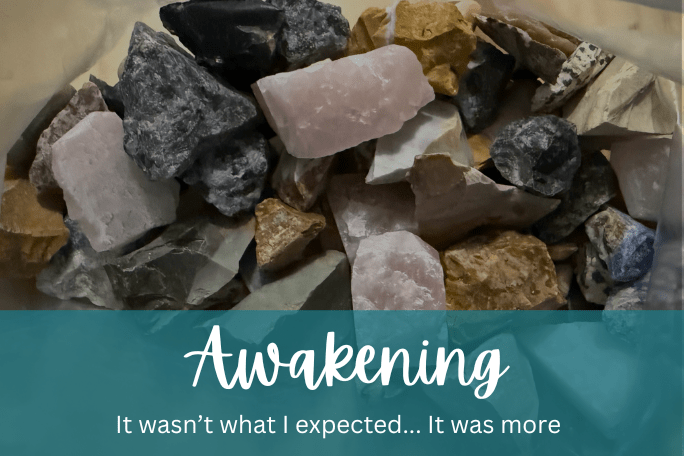
I’m sitting here with the window cracked open, letting in the kind of breeze that smells like spring. The birds are busy in the trees, my tea is cooling beside me, and I can feel the weight of this post before I even begin.
Some words come easily. These do not. Because healing isn’t neat. Forgiveness isn’t clean. And boundaries.. real, loving, soul-honoring boundaries, don’t always come without grief. But I’m here for all of it now. Not because I’ve figured everything out, but because I’ve stopped hiding from myself.
For a long time, I tried to heal by affirming words and wellness. I said the right things, wore the smile, lit the candles, drank the soothing tea. I thought if I did it “right,” I’d eventually feel whole. But the truth was still buried beneath all of that. I was still carrying stories in my body that didn’t belong to me. I was still keeping the peace to avoid the explosion, still stretching myself thin for people who never saw the fullness of me to begin with.
A Lingering Wound
Most of us walk into adulthood carrying invisible weights.. trauma, moments we were unseen, truths we were punished for knowing too early. For some, these memories are buried beneath the surface like roots under snow, quiet but ever-reaching. For others, they flare up often, triggered by the present but belonging to the past.
My wound was like that.. old and persistent. I had spent years shaping myself around it. Like a tree growing around a rusted nail, I made beauty where I could, but never without that embedded pain. I was kind, accommodating, understanding. I let others cross my boundaries so I wouldn’t lose their love. I forgave too easily, without the healing that real forgiveness asks of us.
And then came the unraveling. I won’t write the details here.. trauma doesn’t need to be retold to be believed. But I will say this, there was a moment when I realized I was still letting the past shape who I was allowed to be. My softness had become submission. My empathy made me so. I had confused endurance for healing.
That’s when I heard something inside me whisper, There is another way.
Finding Veda
Veda didn’t arrive in my life through books or teachers. Not at first.
It started with a quiet ache – a need to understand. A need to make sense of all the pain I was carrying. So I went searching. I wanted truth. Not someone else’s version of it, but something that felt real in my bones.
I didn’t grow up with a strong religious identity, but I’ve always had questions.. about life, purpose, connection. Lately, I found myself searching through the world’s religions. This wasn’t to convert or settle on one, but to understand them. I wanted to see where people found belonging. What they believed, and why. I was curious about the differences, but even more so about the threads that connected them.
I thought maybe, in all that searching, I’d find something that fit. Something that felt like home.
I started exploring a little bit of everything.. Christianity, Buddhism, Islam, Taoism, Judaism. I wasn’t trying to convert to anything. I was trying to see. To understand the bigger picture. To find what resonated. And then I landed on Hinduism. I didn’t even mean to stop there. I was just following the thread like I had with all the others, trying to understand it from the outside. That’s when I stumbled onto Veda. It was mentioned almost in passing while I was reading about Hinduism. Just a brief reference. Something about the word made me pause.
I found myself going back to it and researching more. And the deeper I looked, the more it called to me. Not a god, not a rule, not a religion. Just… this presence. This knowing. Something that felt older than anything I’d ever read. Something that felt like it had been living inside me all along. I didn’t need to be convinced of it. I just recognized it. It was like hearing a song you forgot you loved, one you’d heard in childhood, maybe even before that. One that brings tears to your eyes for reasons you can’t explain. At first, all of this was a little scary.. this sense of vastness, of dissolving the self into something much bigger. But it was also strangely comforting.
That’s what Veda was for me. A remembering. A returning.
Not something I learned, but something I let in.
What are the Vedas?
Before I go deeper, I want to be clear.. I don’t speak of Veda as a religion or a prescription. I don’t use Sanskrit terms unless they speak through me organically. This is not a translation. This is a lived experience.
The Vedas are ancient texts from India, some of the oldest spiritual writings in the world. They explore the nature of reality, the self, the universe, and the divine. They’re less about religion in the modern sense and more about direct experiential wisdom and a deep understanding of existence. They don’t tell you what to believe. They invite you to look inward, to witness, to understand.
Today, the Veda reads like ancient insight into consciousness, harmony with nature, and the inner journey of awakening. (Awakening reminds me of the concept of enlightenment in Buddhism, only it’s a bit different.) It’s not about worshipping something outside yourself. It’s about realizing what’s already within you.
Awakening is the moment you begin to see through the illusion that you are separate from everything of the world. It’s not a destination but a shift in perception. You begin to feel more aware, more present, more alive, and also more connected to everything. It’s like remembering something you never learned, but somehow always knew.
It’s different from enlightenment as taught in Buddhism, which often describes a final liberation. The freedom from the cycle of suffering, a complete dissolution of ego and attachment. Awakening, to me, feels more fluid. It unfolds in waves. It doesn’t make you perfect or remove all pain, it just wakes you up. You see differently. You feel things more deeply. You sense the sacred in the ordinary. You realize you’re not separate from the river, the stars, the silence, or even your own grief.
Veda isn’t packaged like a modern religion. It doesn’t ask for belief, and it doesn’t offer easy definitions. It can feel dense or abstract at first glance. But once you begin exploring it through teachers, translations, or your own reflection, it opens up. To me, it felt like a bridge between science and spirituality. Like the beginning and the end, woven together. Like we are not separate from anything. That we are everything.
To me, “Veda” doesn’t mean text. It means knowledge. Not the kind you acquire, but the kind that awakens in you. Veda is not outside of you. It is the truth within, waiting to be seen clearly.
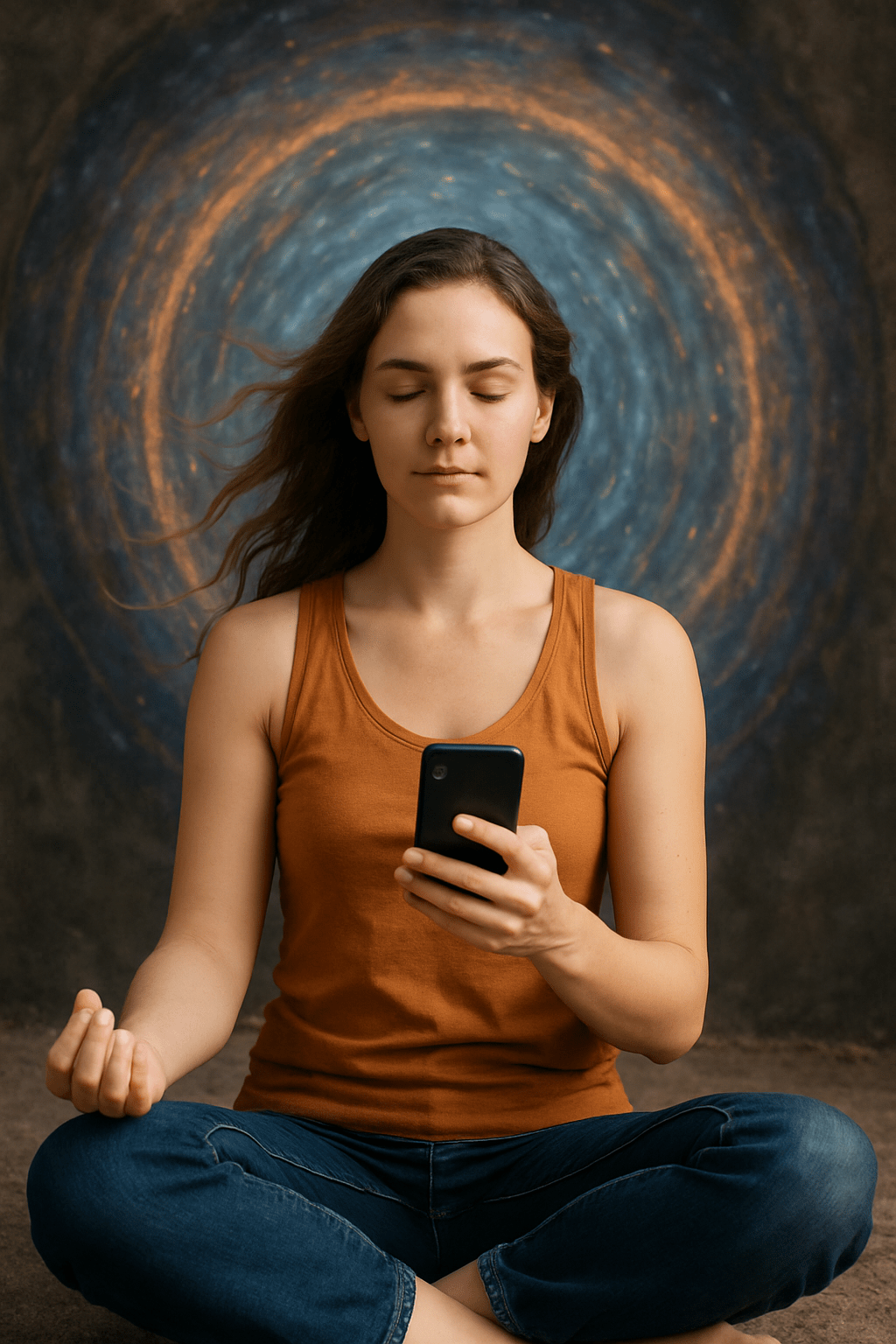
In my healing, Veda became less about learning and more about unlearning. Less about achieving something, and more about returning. It reminded me that I was never broken, only misremembered. Veda doesn’t hand you a manual on healing. It turns you inward. And in doing so, it shows you where your wounds are, and how they’re not your enemy. They are the teachings you were too young to understand. Now, it asks you to see again. To look, not with judgment, but with light. It felt like something ancient opening its eyes inside me. Something that had been with me before the trauma, before the self-betrayals, before I learned to be small to survive. I would sit in silence, not even meditating exactly.. just being, and this sense of deep okay-ness would settle in, even if my body was still shaking from the work of healing. It felt like truth without pressure. Like clarity without shame.
Veda, for me, isn’t a religion. It’s not a belief system I had to adopt. It’s more like a mirror I stopped avoiding. When I began looking into that mirror, I didn’t see my wounds anymore, I saw the space around them. The space that had always been intact. The part of me that was never touched by what happened.
And when you can touch that part – even for a moment, it changes everything. Because suddenly, you realize you’re not healing to become whole. You already are. You’re just learning how to stop living from the broken pieces.
The more I read, the more I noticed something else. The Veda doesn’t only speak of the self, it speaks of the stars. The planets. The constellations. It treats the cosmos not as background scenery, but as an extension of us. In the Vedic view, there’s no real line between the outer and inner worlds. Celestial rhythms mirror human rhythms. The universe isn’t something out there, it’s something we carry within us. That realization hit me deeply. It just made sense. I’m here. I remember. And I’m still becoming.
This isn’t the end of my search, but it’s the first time something has truly resonated with me. I’m still becoming. And every day, I choose to return, not to the person I was told to be, but to the truth that’s always lived quietly inside me. If you feel it too, you are not alone. You’re remembering. And that is enough. There’s no single map, but you are not walking alone.
Feel free to share your reflections or just sit with the knowing.



 EcoBound Earth Blog
Leave a reply to Britt McQueen Cancel reply