
We’ve spent decades (centuries, really) trying to fix broken systems with new policies, better technology, smarter frameworks. We’ve debated governance models and economic theories, passed legislation and launched initiatives. And still, something essential keeps slipping through our fingers.
Maybe we’ve been starting in the wrong place.
Before the Blueprint, the Body
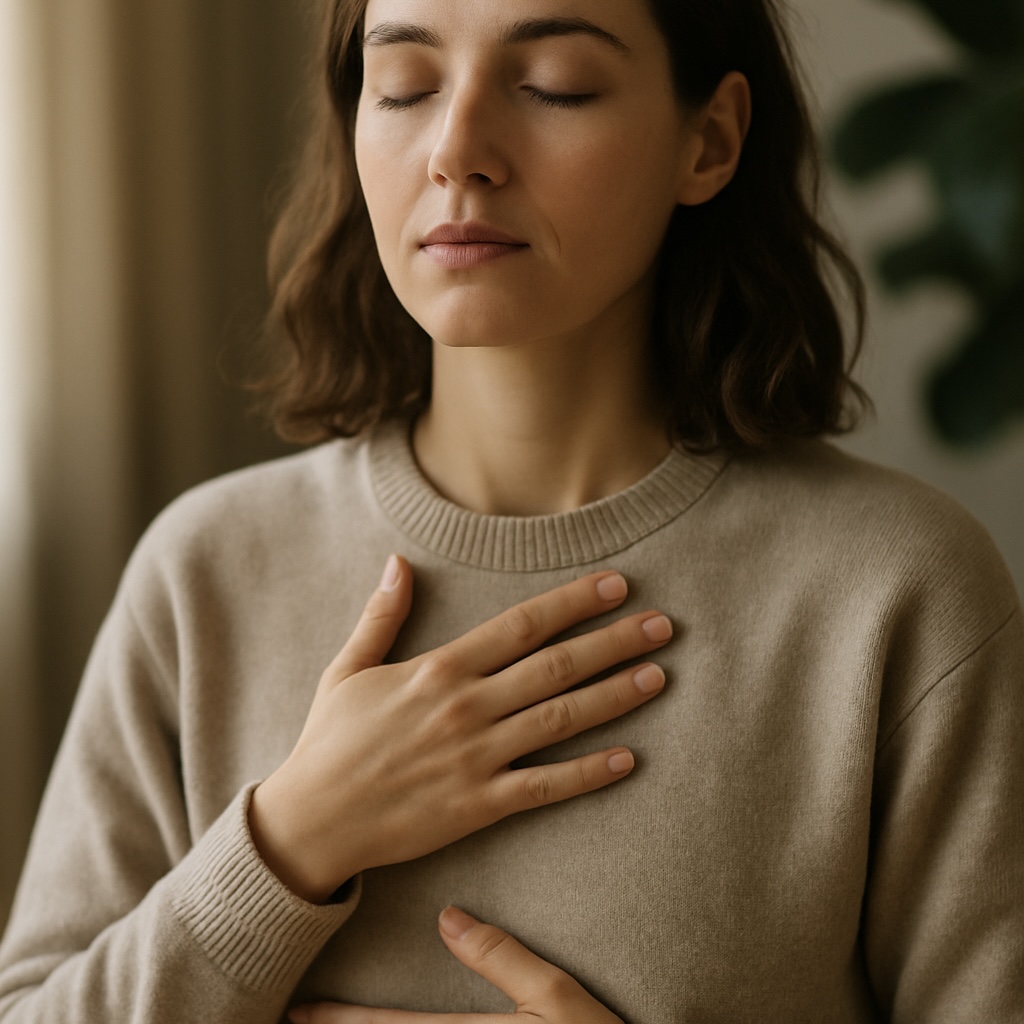
Before any system, infrastructure, or governance can truly shift, the body must feel safe again. Not comfortable. Not numb. Safe in that deep, cellular way that allows you to finally exhale.
Because a regulated nervous system isn’t just calm. It’s clear.
It knows what matters. It can stay present with complexity without collapsing into reaction. It can hold nuance. It can love, not as sentiment, but as the foundational capacity to see another being and recognize yourself in them.
And that recognition? That’s what makes stewardship possible.
When your nervous system is hijacked by chronic stress, by the accumulated weight of living in systems that weren’t designed for human flourishing, every interaction becomes a potential threat. Every difference becomes dangerous. You can’t tend to what you’re afraid of. You can only try to control it, escape it, or destroy it.
So the work begins here: in the breath, in the body, in the slow recalibration of a system that’s been running on emergency power for far too long.
The Unbinding We Can’t Skip
Trauma fragments perception. It closes the heart, distorts truth, disturbs connection. It makes us see enemies where there are only other wounded people. It makes us repeat the same harmful patterns while convinced we’re doing something different this time.
If we don’t unbind trauma, individually and collectively, we simply transport it into every new structure we build. We create “progressive” organizations with authoritarian cultures. We design “healing spaces” that replicate the same power dynamics we claim to have transcended. We launch movements for justice that devour their own members.
The healing of hate isn’t naïve idealism. It’s the clearing of distortion so that presence can return. So that we can finally see what’s actually here, rather than what our wounds tell us is here.
This work is uncomfortable. It asks us to look at the ways we’ve internalized the very systems we’re trying to change. It asks us to stop weaponizing our pain and start composting it into wisdom.
But there’s no shortcut around it. The path forward runs directly through the places we least want to go.
Forgiveness as Portal, Not Bypass
Here’s where people get nervous. Forgiveness can sound like erasure, like spiritual bypassing, like another way to silence the hurt and pretend everything’s fine.
But real forgiveness isn’t about forgetting. It’s not about declaring that the past didn’t matter or that harm wasn’t real.
Forgiveness is release, the deliberate choice to stop carrying the weight of what happened into every moment of what could be. Not because the past is irrelevant, but because hauling it forward prevents us from remembering the future.
Forgiveness, in this sense, is an act of remembering who we truly are beyond the wound. It’s the recognition that we are not, at our core, the sum of what was done to us or what we did in our unconsciousness.
This doesn’t mean reconciliation with those who harmed us. It doesn’t mean trusting the untrustworthy or returning to dangerous situations. It means reclaiming the energy we’ve locked in resentment and redirecting it toward regeneration.
The Return to What Matters
When people begin to feel whole, not perfect, not healed of everything, but whole in that rooted, integrated way, something shifts.
They stop reacting and start responding.
They stop hoarding and start tending.
They remember the Earth, not as resource to be extracted, but as relative to be honored.
They remember how to listen (truly listen) to what another person is actually saying rather than preparing their counterargument. They remember how to hold complexity, how to co-create rather than compete, how to build with the long view in mind.
Because wholeness isn’t about having it all figured out. It’s about being present enough to work with what is, rather than being at war with it.
And from that place, the important things become obvious again. Not easy. Not simple. But obvious in the way that breathing is obvious once you stop holding your breath.
The Village That Never Left
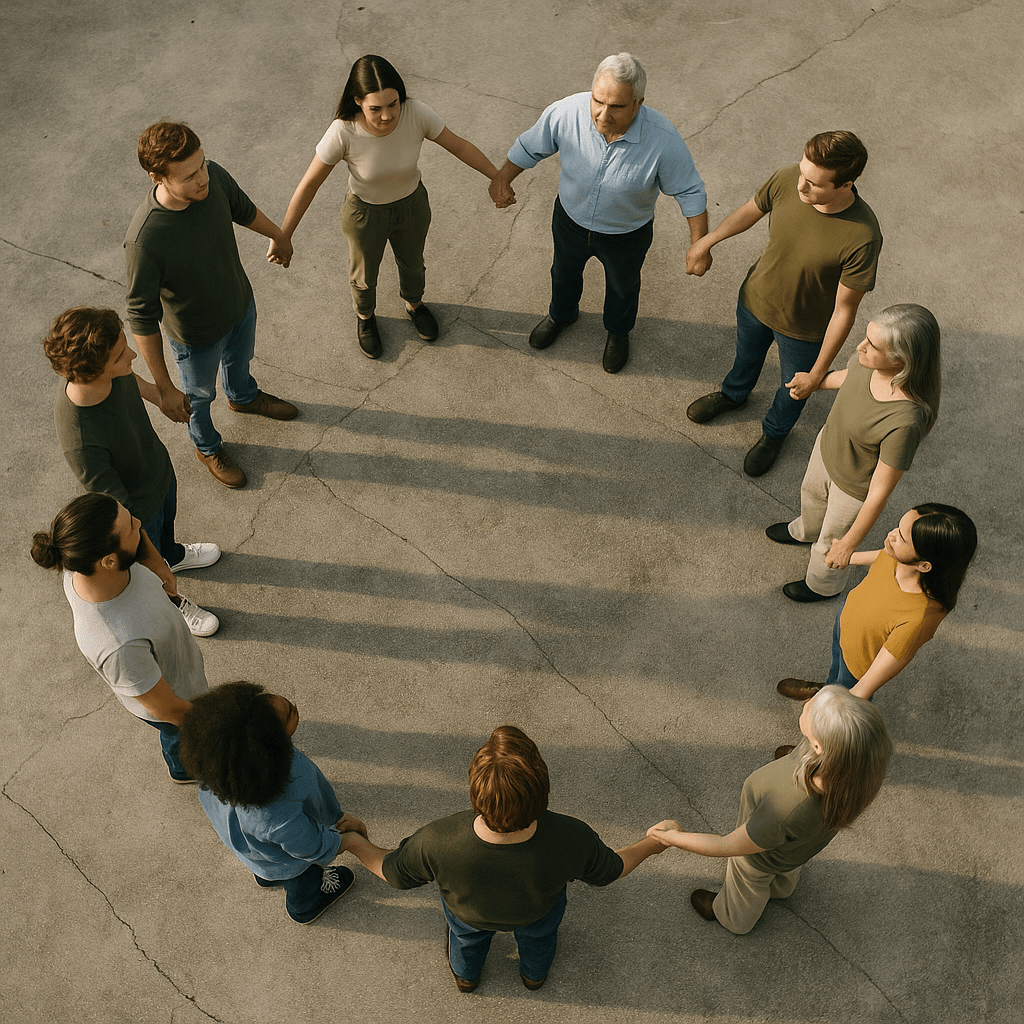
We’ve forgotten the village while living in houses that touch. We suffer in silence behind closed doors while our neighbors do the same, each of us convinced we’re the only one falling apart.
But the village isn’t a relic of the past that we need to artificially reconstruct. It’s a pattern of care that emerges naturally when we stop pretending we’re fine.
It only takes one soul to knock on a door and say, “You don’t have to do this alone anymore.”
One person bringing soup when someone’s sick. One person showing up to help with the kids. One person brave enough to admit they’re struggling and create permission for others to do the same.
The village returns not through programs or platforms, but through the simple, radical act of showing up for each other, side by side, imperfect and real.
Wholeness Isn’t the Destination
When you get back to wholeness, to that place where you remember your Source, your essential nature beneath all the conditioning, everything else begins to come naturally.
Not effortlessly. Not without work or discernment or ongoing practice.
But naturally, in the way a tree grows toward light, in the way water finds its course, in the way a body knows how to heal when given the right conditions.
Because wholeness is not the reward at the end of a long journey of self-improvement. It’s not the achievement unlocked after sufficient therapy and meditation and shadow work.
Wholeness is the origin point.
It’s not the last step. It’s the first breath of what’s real.
It’s where we start again and again in each moment we choose presence over pretense, connection over control, love over fear.
And from that first breath, everything else becomes possible.
What would change if we stopped trying to fix the world and started by letting ourselves be whole? What becomes possible when healing is no longer something we do before we act, but the very ground we act from?
If your heart is hurting, if you’re trying your hardest just to stay here, please know that you matter. You are not alone. There is a way through this.
Download The Rooted Path: A Gentle Return to Wholeness as a Free PDF or eBook.
No cost. No email sign-up. Just a hand extended.
If this book can ease even one ounce of what you’re carrying, it has already done what it was meant to do. I’m with you.





 EcoBound Earth Blog
Leave a comment